





Stone export, as a vital branch of the construction and mining industry, is a highly challenging and competitive field. Stone producers and exporters face an incredible variety of stones, from travertine and marble to granite and specialized stones such as travonyx and sandstone. Success in international markets is not achieved merely by producing high-quality stone. Field experience shows that professionalism in negotiation and pricing, the ability to provide transparent information, and skill in building trust with foreign clients are decisive factors in export success. Stone export is not just about offering a product; it is a process where market understanding, buyer relationship management, and presenting competitive advantages determine the exporter’s position in the global market.
Complete understanding of the customer and target market
One of the fundamental principles of successful negotiation is a precise understanding of the customer and target market. Foreign buyers have diverse goals and needs, and simply providing high-quality stone cannot satisfy all clients. Some buyers prioritize low prices and cost-effectiveness, others value uniform quality and international standards, and some seek specific patterns, colors, and unique stone effects for luxury projects.
Before starting negotiations, it is essential to know exactly what the customer expects, what type of project the stone will be used for, and whether their priorities include price, delivery time, or product quality. A complete understanding of the customer’s needs allows you to offer proposals fully aligned with their expectations, significantly increasing the likelihood of a successful deal.
Importance of providing accurate and transparent stone information
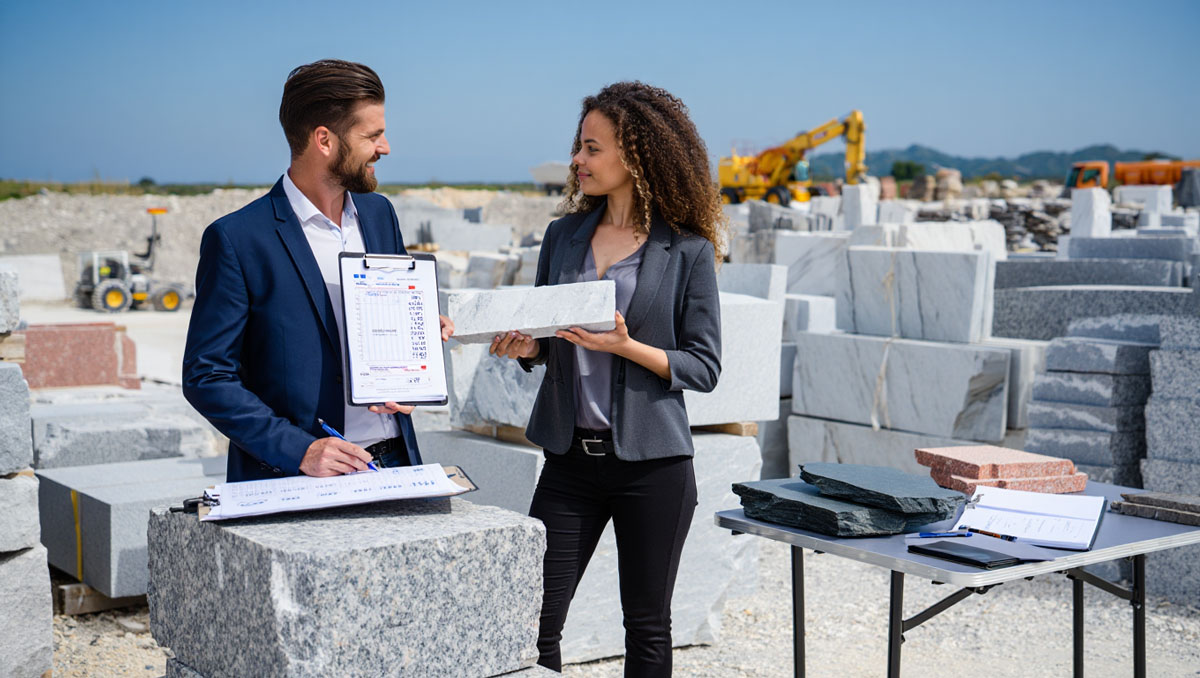
Field experience shows that foreign buyers reach decision-making only when they receive complete and accurate information. Providing technical specifications of the stone, dimensions and thickness, color and pattern, consistency of sort, porosity and durability, and packaging type is essential. Additionally, supplying high-quality images of blocks and slabs, packaging details, and shipping information builds trust in the exporter’s professionalism and accelerates decision-making.
Transparency and comprehensive details are key to gaining trust in international markets, demonstrating that you pay special attention to product quality and the customer’s needs.
Skills required in stone export negotiations
Professional negotiation in stone export requires a set of skills, and field experience shows that following them can be the difference between a successful deal and a lost opportunity.
Effective communication and active listening
In successful negotiations, the seller does more than just talk; they actively listen. Understanding the customer’s needs, concerns, and priorities allows you to propose suitable solutions and offers.
Step-by-step and goal-oriented negotiation
A common mistake is presenting the final price all at once. Negotiation should follow defined stages: first introduce the product and its advantages, then identify the customer’s specific needs, present terms and services, followed by pricing, and finally reach a final agreement. This approach ensures that the product’s value is properly understood and that the customer feels the deal is logical and fair.
Offering real benefits instead of just features
Instead of simply stating product features, it is better to show how these features benefit the customer. For example, rather than saying “the stone has a high polish,” you could say “the high polish enhances the appearance of luxury projects and increases the final building value.”
Flexibility in negotiations while maintaining red lines
Flexibility in negotiation is important, but having defined red lines is essential. These lines include the minimum acceptable price, payment terms, delivery time, and packaging requirements. In other areas, showing flexibility demonstrates that you value the customer, which enhances their trust.
Professional principles of stone export pricing
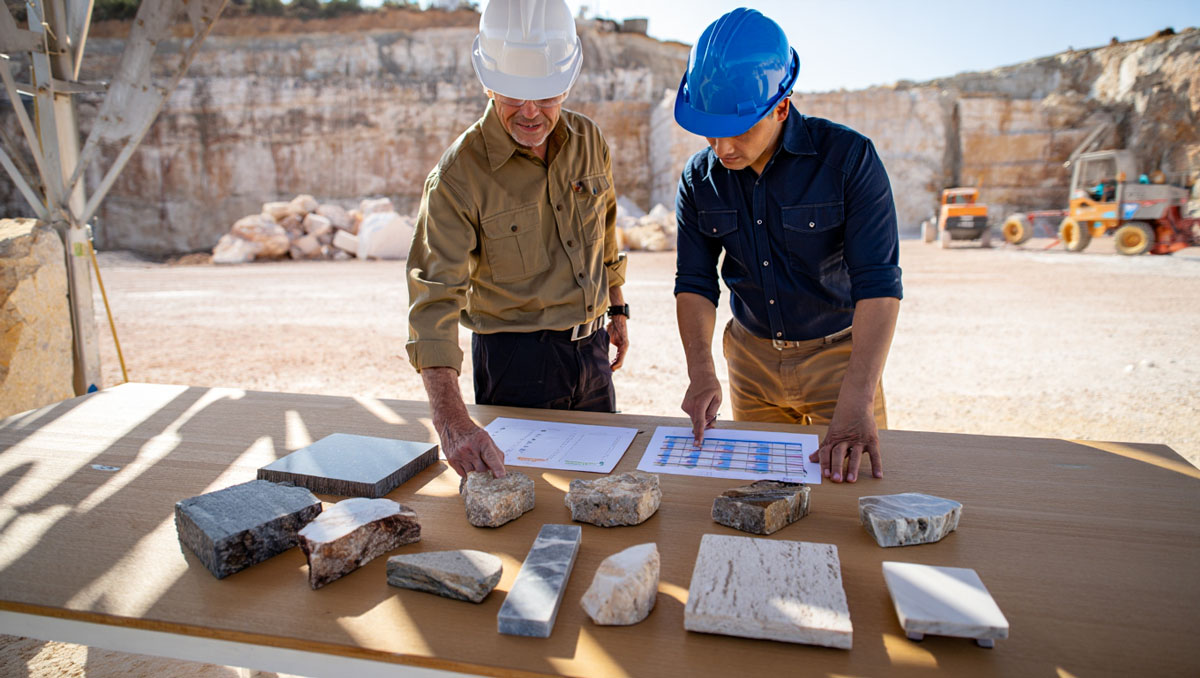
Pricing is one of the most critical stages of export and must be done carefully and strategically. Field experience shows that incorrect pricing, even for high-quality products, can eliminate export opportunities.
Accurate calculation of all costs
The final price must include all production, processing, packaging, domestic transport, loading, and international shipping costs. Neglecting any of these factors can cause losses for the seller or make the price appear unfair to the customer.
Attention to sort uniformity
One factor highly valued in foreign markets is uniformity of sort. Buyers receiving uniform stones tend to establish long-term business relationships with the exporter, even if the price is slightly higher. Therefore, consistent quality should be highlighted as an advantage in pricing and negotiation.
Offering multiple price options
Providing several price options for a product, such as economic, standard, and premium, allows the customer to choose rather than rejecting the offer entirely. This method is proven in field experience to significantly increase the chances of closing a deal.
Transparency in prices and trade conditions
Clear presentation of pricing and complete explanation of additional costs, delivery terms, and pricing methods (EXW, FOB, or CIF) are key to building customer trust. Ambiguity in pricing often causes hesitation and reduces the chance of success.
Leveraging Iran’s export advantages
Iran has unique advantages in stone export that should be highlighted during negotiation and pricing: stone variety, large-scale production capability, simultaneous provision of blocks and slabs, and competitive production costs. Presenting these advantages helps the proposed price appear fair and increases the customer’s willingness to purchase.
Conclusion
Success in stone export is not achieved solely through product quality. Field experience shows that the most successful exporters follow professional negotiation principles, provide transparent information, price accurately, manage customer relationships effectively, and highlight real product advantages. Stone export is a comprehensive process where trust, negotiation skills, and pricing strategy are the foundational pillars of success in international markets. Adhering to these principles allows exporters to enter new markets, secure loyal customers, and establish their position globally.
Frequently Asked Questions
What is the best way to start negotiations with foreign customers?
Sending a complete and professional profile including real images, technical specifications, sorts, and sample base prices allows the customer to feel trust and professionalism from the start.
What are the main factors influencing stone export pricing?
Sort uniformity, type of stone, processing quality, packaging, shipping conditions, payment terms, and order volume are the main determining factors.
Does offering a low price always attract customers?
No. Customers who value quality may perceive low prices as low quality. Fair and transparent pricing is always the best choice.
How can foreign customer trust be earned?
Quick responses, providing real documentation and product samples, transparency in pricing, and timely delivery are the most important factors in building trust.
What is the most common mistake in export negotiations?
Starting negotiations by presenting the price directly without fully introducing the product and without identifying the customer’s needs reduces the perceived value of the product and decreases the likelihood of a successful deal.